


Tunnel Emergency Telephone System: Ensuring Safety Communications in Transportation Infrastructure
In modern transportation infrastructure, reliable communications within tunnels,
utility tunnels, and highways are critical for ensuring personnel safety and prompt
handling of emergencies. The tunnel emergency telephone system provides
dependable communication assurance for these environments. Particularly
during crises, this system enables rapid external contact, ensuring smooth
information flow and effective response to various unexpected incidents.
Application Scenarios
Tunnel emergency telephone systems are primarily deployed in the following
locations:
Tunnels: Underground transportation tunnels are common high-risk areas
where emergency telephone systems provide critical communication support
for personnel inside.
Utility Tunnels: Complex pipeline corridors often integrate multiple infrastructure
systems. Emergency telephone systems provide rapid communication channels
during failures or accidents.
Highways: Highway tunnels and bridges serve as critical transportation hubs.
Emergency telephone systems facilitate swift communication during accidents
or other emergencies.
Core Functions
The core function of the tunnel emergency telephone system is to provide rapid
emergency communication assurance for personnel within and around tunnels:
Emergency Call: The system features a one-touch emergency call button,
ensuring personnel can swiftly contact external command centers or rescue
departments during emergencies, minimizing response time.
Communication Assurance: System design ensures unimpeded communication
between tunnel interiors and exteriors, guaranteeing timely transmission of
critical instructions.
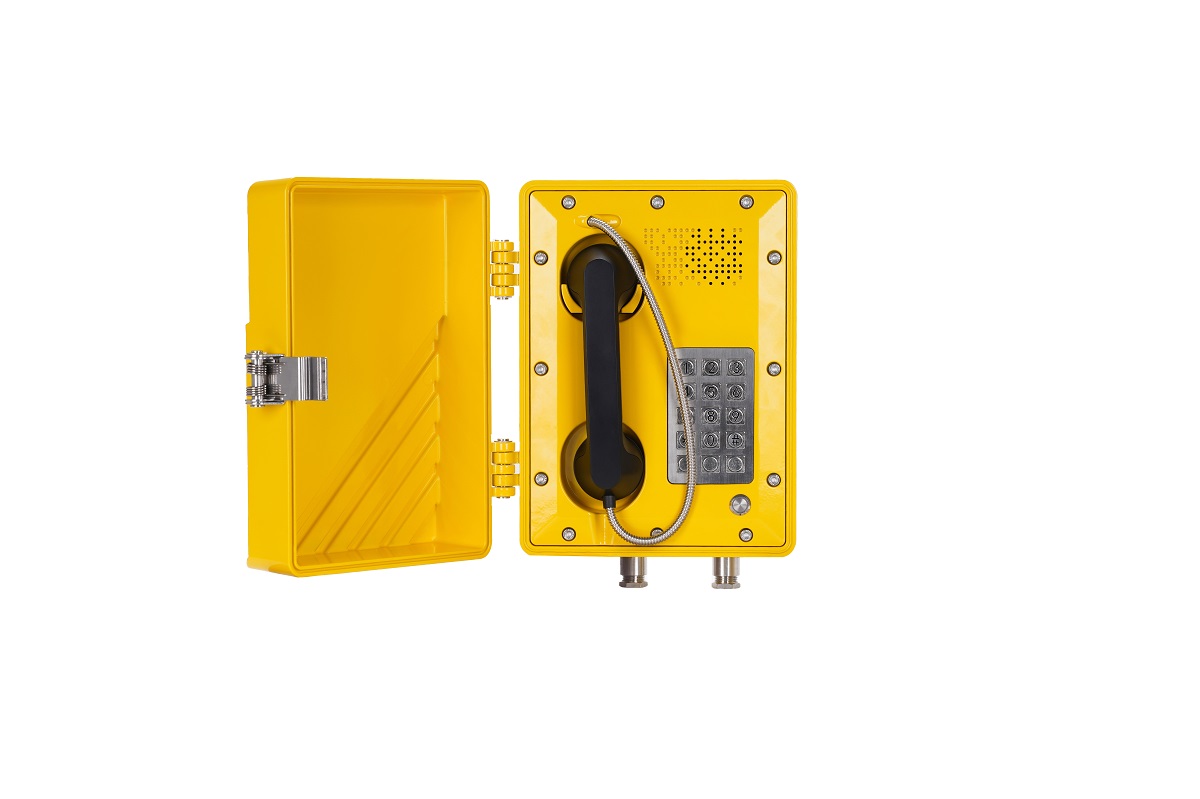
Appearance Features
High-Visibility Yellow/Orange Housing: Devices feature highly visible yellow or
orange casings for rapid identification during emergencies, preventing accidental
operation.
White Speaker Assembly: Equipped with clearly visible speaker components
for broadcasting announcements, ensuring unimpeded transmission of
emergency information.
Integrated Speed Camera Function: Some units incorporate speed camera
functionality to monitor traffic flow and document incidents.
Emergency Call Button: Features a prominent, easy-to-operate emergency
call button enabling staff to initiate alerts swiftly during crises.
Installation Methods
Wall-Mounted Fixed Installation: Devices utilize a wall-mounted design,
securely affixed to tunnel walls or utility tunnel structures to withstand
environmental impacts and ensure rapid location during emergencies.
Coordinated Placement with Emergency Facilities: Devices are strategically
positioned alongside other emergency infrastructure such as fire hydrant
cabinets and emergency lighting systems to ensure cohesive and
accessible emergency response environments.
Communication Assurance
One-Touch Emergency Call Response: The device enables instant call
activation during emergencies, ensuring personnel can rapidly communicate
with external parties for timely rescue.
Uninterrupted Communication Inside/Outside Tunnels: Designed specifically
for tunnels and similar environments, the system employs advanced
communication technology to maintain stable, clear calls despite external
factors like strong electromagnetic interference.
Information Transmission
Broadcast System for Critical Information: The integrated broadcast system
delivers vital messages—such as evacuation orders and rescue updates—to
personnel inside and outside the tunnel during emergencies.
Multi-System Interoperability: The system interfaces with other emergency
facilities like surveillance cameras and fire alarm systems, enabling information
sharing and efficient response. This empowers emergency personnel to accurately
assess the situation and make swift decisions.
The application of tunnel emergency telephone systems in transportation infrastructure
is crucial for enhancing safety in tunnels, utility tunnels, and similar environments.
By integrating multiple functions—including communication assurance, emergency
calling, and public address systems—it ensures rapid and clear transmission of
critical information during emergencies. This enables effective incident response
and safeguards human life. As transportation infrastructure development continues,
such emergency communication systems will become an essential component in
ensuring public safety.
Next:Communication Challenges and Solutions in Tunnel Construction: The Critical Role of IP Emergency Tel Return to List