
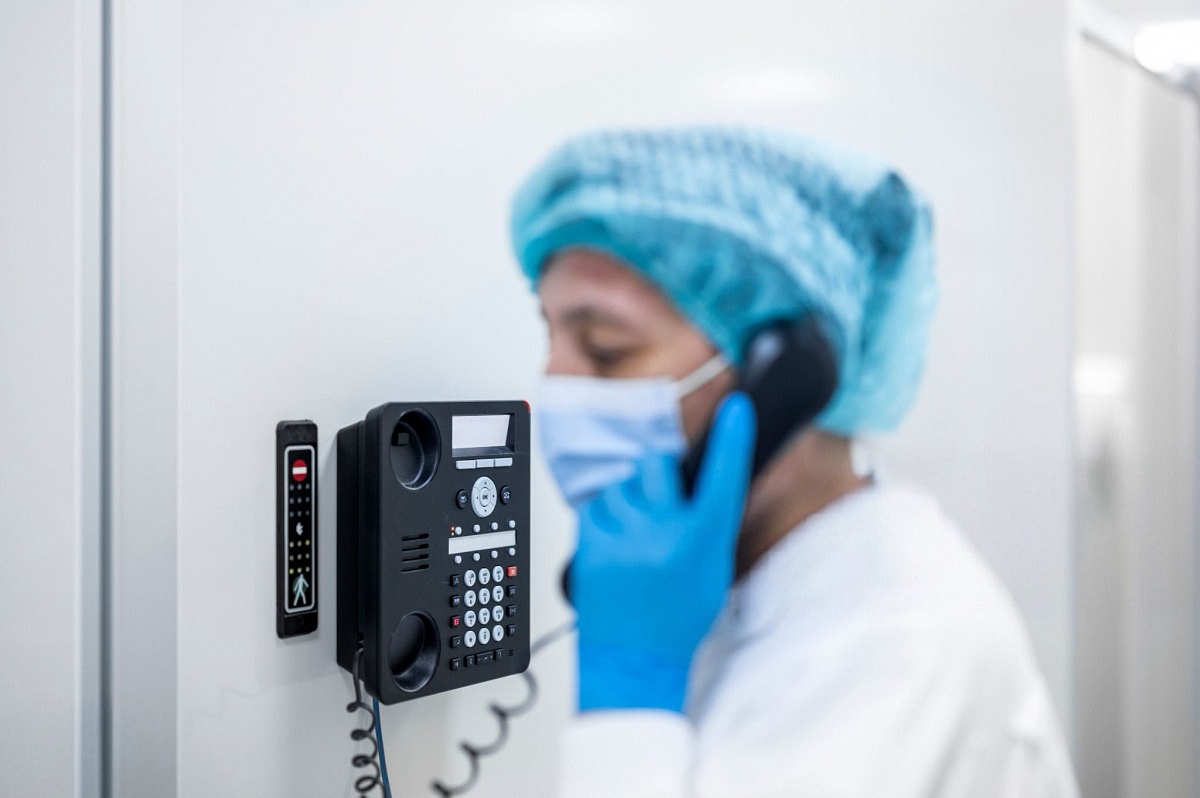
IP Intercom Systems: A Core Force for Enhancing Hospital Security Management
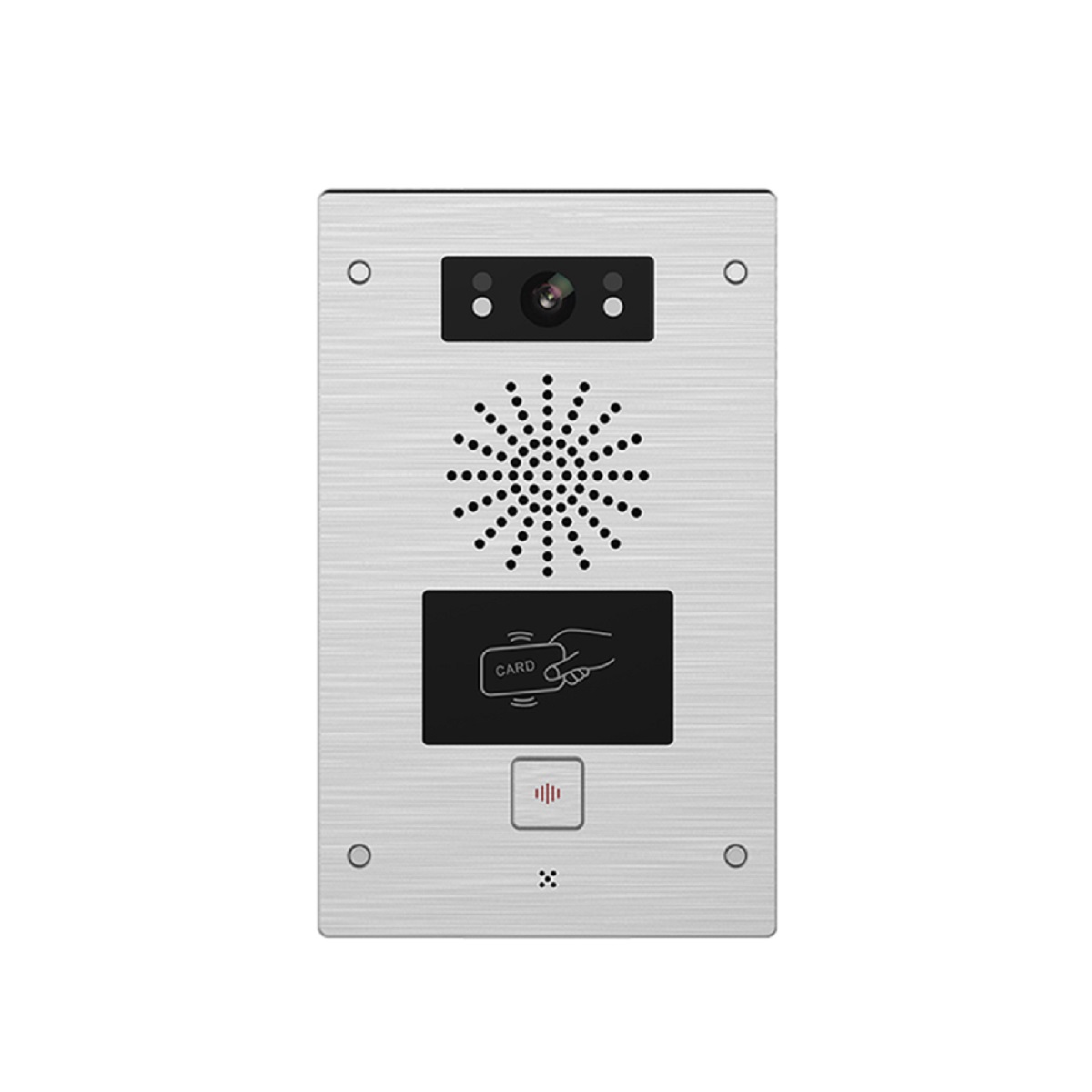
With the advancement of smart hospital construction, hospital
security management no longer relies solely on traditional security
measures. IP intercom systems, as a new generation of
communication tools, are becoming an indispensable and crucial
component of hospital security systems. Compared to traditional
analog intercom devices, network-based IP intercom systems,
through their high efficiency and intelligence, not only improve
hospital communication efficiency but also promote the intelligent
upgrade of hospital security management in multiple aspects.
This article will analyze from multiple perspectives how IP intercom
systems comprehensively enhance the capabilities of hospital
security systems.
I. Building a Real-Time Emergency Response Mechanism
Hospitals are high-risk public places where emergencies
frequently occur, including sudden patient illnesses, falls,
doctor-patient conflicts, fires, or equipment malfunctions.
IP intercom systems can quickly respond to various
emergencies through a one-button emergency call function.
Deployment Locations:
Bedside in patient rooms
Restrooms
Corridors
Parking lots
Elevator lobbies
Working Principle: When a patient or medical staff presses
the emergency call button, the signal is immediately
uploaded to the nurses' station and simultaneously
pushed to the security center. Through coordinated
broadcasting and audible/visual alarms, the system
can handle emergencies within seconds, significantly
reducing the risk of incident escalation and ensuring
timely response to hospital emergencies.
II. Achieving Hospital-wide Seamless Communication
Coverage
Traditional telephone systems typically rely on cabling,
have limited scalability, and struggle to cover the entire hospital.
The IP intercom system, based on the hospital's existing LAN
or private network architecture, boasts stronger network
coverage capabilities, achieving seamless communication
coverage throughout the hospital.
Coverage Areas:
Outpatient Lobby
Ward Floors
ICU Intensive Care Unit
Pharmacy
Operating Rooms
Parking Area
Underground Passages
With a unified management platform, cross-floor and
cross-department instant intercom and broadcast notification
functions are seamlessly connected, ensuring rapid information
transmission and protecting the safety of patients and medical staff.
III. Enhancing Access Control and Management Security
Sensitive areas of the hospital, such as the ICU, neonatal ward,
and operating rooms, require strengthened access control management.
The deep integration of the IP intercom system and the access control
system improves the security of hospital entrances and exits.
Typical Application Scenarios:
ICU Restricted Area Access
Neonatal Ward Management
Operating Room Access Control
Pharmacy Warehouse Management
Through video intercom identity verification, remote door opening control,
and access record archiving, the IP intercom system effectively prevents
unauthorized personnel from entering sensitive areas, strengthening
hospital access control.
IV. Integration with Video Surveillance and Alarm Systems
Modern hospital security systems emphasize "multi-system linkage."
The IP intercom system can be deeply integrated with video
surveillance and alarm systems to achieve real-time monitoring
and event handling.
Main Functions:
Automatic pop-up of on-site monitoring screen upon call
Emergency button triggers video recording and archiving
Automatic alarm for abnormal events
When an emergency occurs, security personnel can assess the
situation in real time through video and voice, improving processing
efficiency and taking timely measures to ensure the overall safety
of the hospital.
V. Enhancing the Safety of Medical Staff
Safety is particularly important for medical staff on night shifts or
in special departments. The IP intercom system provides immediate
safety assurance to medical staff through a portable wireless terminal.
Features include:
One-click alarm location
Real-time connection with security center
In the event of an emergency, medical staff can quickly send a distress
signal to the security center, ensuring a rapid response and timely
arrival at the scene, protecting the personal safety of medical staff.
VI. Support for Data Recording and Traceability Management
Hospital security management not only relies on real-time response
but also requires traceability. The IP intercom system has powerful data
recording and traceability functions, ensuring the integrity of records after
an incident.
Features:
Call recording
Call record archiving
Event timeline tracking
Operation log management
In the event of disputes or security incidents, hospitals can use this data
to provide strong management evidence, improving the transparency
of security incident handling.
VII. Enhanced Security Management Capabilities in Public Areas
Hospital public areas with high traffic, especially emergency entrances
and lobbies, are prone to emergencies. By deploying IP intercom
broadcast terminals, hospitals can achieve hospital-wide emergency
evacuation and safety alert broadcasts.
Application Scenarios:
Emergency Evacuation Broadcast
Safety Notice Broadcast
Temporary Notice Issuance
In emergencies such as fires and power outages, hospitals can issue
unified instructions through the system, reducing chaos and improving
the efficiency of public safety management.
VIII. Support for Remote Centralized Management
Large hospitals or multi-campus medical institutions can achieve remote
centralized management through IP networks, reducing operation and
maintenance costs and improving overall safety management efficiency.
Main Advantages:
Unified Monitoring Across Multiple Campuses
Remote Maintenance and Upgrades
Centralized Data Storage
Unified Access Control
Through centralized management, hospitals can conduct safety
management and data storage more efficiently, improving operation and
maintenance efficiency.
IX. The Core Value of IP Intercom Systems to Hospital Security Systems
The role of IP intercom systems in hospital security management cannot
be ignored. It not only improves the efficiency of hospital emergency
response but also optimizes the hospital's security protection capabilities
through multi-system linkage and intelligent management. Specifically,
this manifests in the following ways:
Shortening emergency response time
Achieving multi-system (interconnection/coordination)
Strengthening access control in sensitive areas
Improving the safety and security of medical staff
Achieving traceable data management
Supporting the digital and intelligent upgrade of hospitals
In summary, IP intercom systems provide strong technical support for
hospital security management, are a core component of smart hospital
construction, and drive hospitals towards greater efficiency and security.
Next:None Return to List