

Building Intercom System: The Fundamental Communication Hub for Smart Communities and Intelligent Buildings
In today's rapidly developing smart communities and intelligent
buildings, the building intercom system has evolved from its
initial function as a "door-opening intercom tool" into a crucial
infrastructure integrating communication, security, and
management. It not only affects residents' daily convenience
but also directly impacts the overall security and intelligence
level of a building.
I. What is a Building Intercom System?
A building intercom system, also known as a building intercom
system (BIS), is an electronic communication system widely
used in residential communities, office buildings, hotels,
schools, hospitals, and other locations.
The system integrates functions such as calling, two-way
intercom, video viewing, remote unlocking, and management
linkage, making it an indispensable component of modern
intelligent buildings.
II. The Development History of Building Intercom Systems
1️⃣ Initial Stage: Analog Non-Visual Intercom
Early building intercom systems primarily used analog audio
technology, only enabling simple calling, talking, and unlocking
functions, with limited functionality and scalability.
2️⃣ Development Stage: Bus-based Non-Visual System
With the expansion of building scale, bus-based parallel
architecture has become widespread, enabling
multi-building networking.
The property management center can communicate with
resident extensions and door stations via the management
unit or remotely unlock doors, significantly improving
management efficiency.
3️⃣ Intelligent Stage: IP Network Video Intercom
Current mainstream building video intercom systems have
fully entered the era of IP-based, networked, and intelligent
systems.
The system can be deeply integrated with mobile apps,
tablets, computers, smart homes, and security systems,
enabling video calls, remote management, and intelligent
linkage anytime, anywhere.
III. Composition of a Building Video Intercom System
A complete building video intercom system typically
consists of the following parts:
Management Center: Responsible for unified system
management, including user information, equipment
status, alarm handling, and remote monitoring.
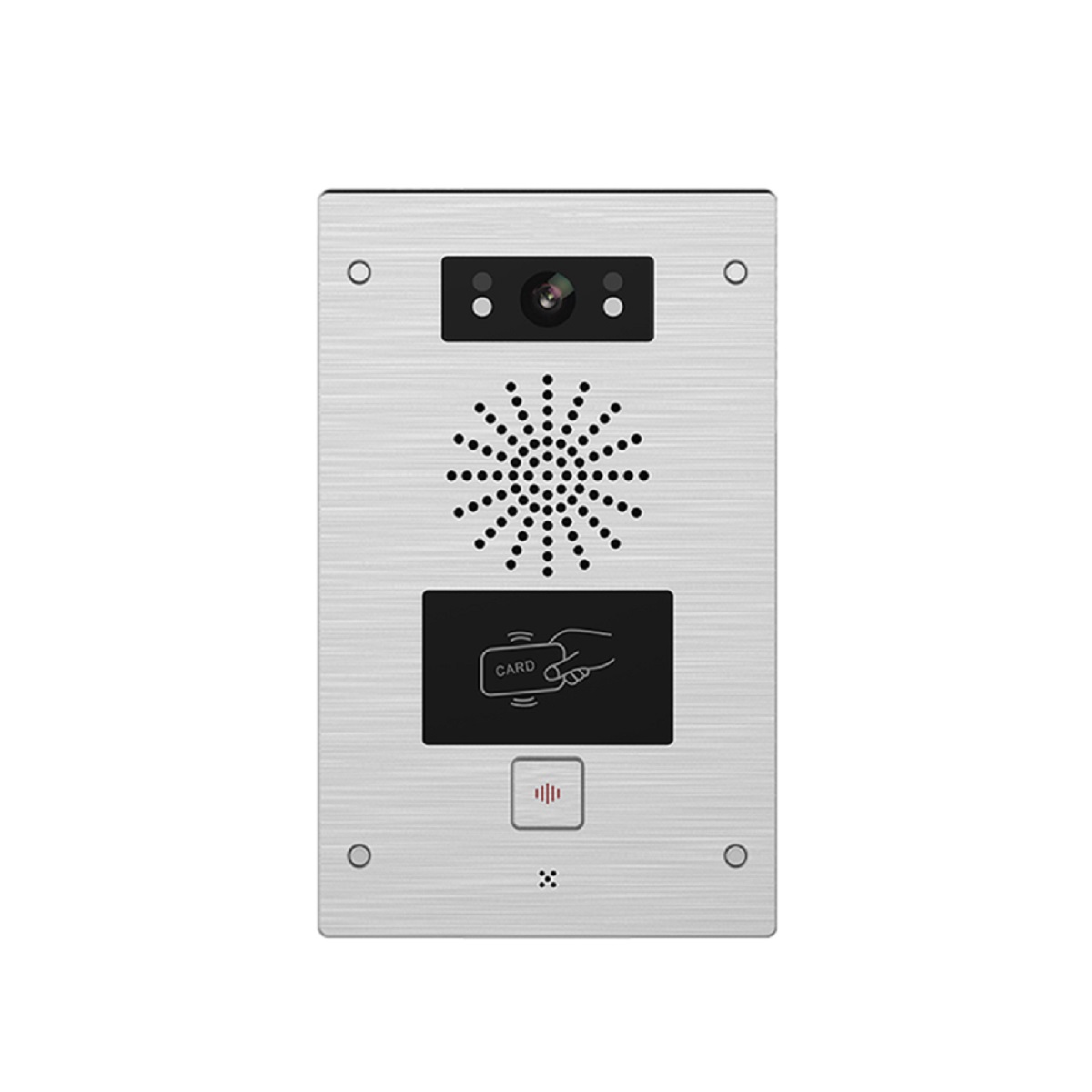
Building Intercom Main Unit (Door Station): Installed
at the building entrance/exit, enabling visitor calls,
video calls, and access control.
Indoor Unit: Installed inside residents' homes, enabling
video intercom, remote unlocking, and doorway monitoring.
Outdoor Unit (Optional): Used for multiple entrances
or special scenarios, enhancing system flexibility
and coverage.
IV. Core Functions of Building Video Intercom:
Two-way Video Intercom + Remote Unlocking:
Residents and visitors can talk in real-time, and
unlock doors remotely after identifying the visitor.
Management Center Call and Response: Residents
can call property management with one click, and
property management can also proactively contact
any resident.
Call Privacy Mechanism: Third parties cannot eavesdrop
on calls between any two parties, ensuring privacy
and security.
Indoor Unit Image Monitoring Function: Even without a call,
residents can proactively view real-time doorway footage.
Multi-Door Unit Parallel Operation: Supports unified
management of multiple entrances, suitable for large
residential communities or commercial complexes.
Management Center Video Monitoring and Remote
Unlocking: Improves property security response speed
and management efficiency.
V. Typical Application Scenarios of Building Video Intercom:
Residential Communities: Enhances overall community
security, optimizes visitor management, and improves the
living experience.
Office Buildings
Strengthen access control to cultivate a professional and
secure corporate image.
Hotels
Enable visitor reception and service calls, improving
customer satisfaction.
Schools
Strictly control campus entrances and exits to ensure the
safety of teachers and students.
Hospitals
Support emergency calls and high-definition video intercoms
between patients, nurses, and doctors, improving emergency
response efficiency.
VI. Advantages and Disadvantages of Building Video Intercoms
✅ Advantages
1. Simple wiring and convenient installation
Based on TCP/IP networks, a single network cable can
complete voice, video, and data transmission, significantly
reducing construction difficulty.
2. Strong networking capabilities and high scalability
Easy to integrate with access control, security, broadcasting,
and smart home systems, becoming the communication
core of the "digital home."
3. Long transmission distance and low overall cost
No distance limitations, convenient maintenance, and a
more cost-effective overall investment.
4. Rich functions and high security
Supports video recording and storage, cloud playback,
one-click alarm, and other functions for faster emergency
response.
5. Improved Management Efficiency and Convenience
Supports remote operation and maintenance, and online
management, reducing labor costs.
⚠️ Disadvantages
1. High Technical and Installation Requirements
It is recommended that professional personnel plan,
install, and debug the system to ensure stable operation.
2. Dependence on Network Environment
System functionality may be limited in the event of network
anomalies or power outages, requiring backup solutions.
VII. Future Development Trends of Building Video Intercom
Accelerated Cross-Industry Integration
Deep integration with smart home, security, and IoT systems
to achieve truly smart buildings.
Integration of More Sensing Technologies
Such as temperature, humidity, and air quality monitoring,
expanding the dimensions of building management.
Deep Application of Artificial Intelligence
Facial recognition, voice recognition, and intelligent analysis
make building video intercoms "smarter."
Next:Acewo One-Button Hands-Free Intercom: A 4G Wireless Emergency Call System That Only Requires Power Return to List